News
Between mitigation and corporate responsibility: responses to data centers
Given the socio-environmental damage data centers cause to territories and communities, are there examples of mitigation measures taken by technology companies? And if so, how were they developed, and how have they been evaluated? Furthermore, are there any cases in Latin America?
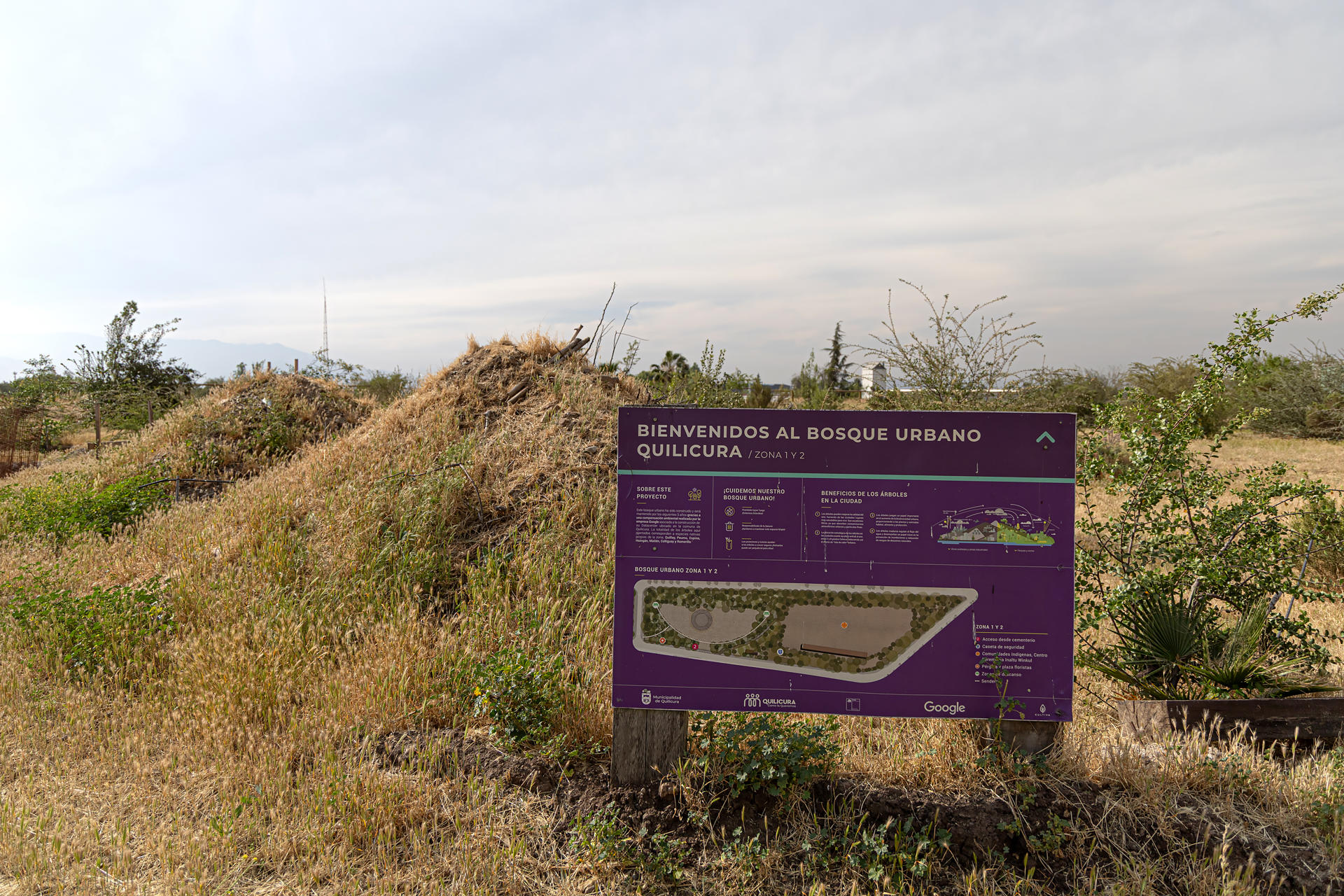
Photo EFE/ Ailen Díaz
A constant concern when studying the socio-environmental impacts of data centers for Artificial Intelligence is the power imbalance between the actors involved and the various dimensions in which it is expressed. We are talking about technology companies that seem to have not only significant economic power compared to Latin American states, but also, above all, irresistible symbolic power: no government seems to have the audacity to say no to them. Their presence always seems to be—irrevocably—a blessing for economies and for the image of governments.
This imbalance is obviously magnified at the micro level. Local authorities and communities directly affected by socio-environmental impacts seem to have no chance of demanding mitigation, reparations, and/or compensation that are adequate for the damage and sustainable in the long term: there is a lack of information, preparation, time, resources, etc. That is why we set out to better understand how, in the face of the socio-environmental damage caused by data centers in communities and territories, containment strategies are actually deployed through the document: “Mitigating the socio-environmental impacts of data centers. Experiences in Latin America.”
The cases analyzed in Latin America by the researcher invited by DataCenterBoom!, Chilean environmental activist Rodrigo Vallejos, who has extensive experience with data centers in his community, Quilicura, in Santiago, Chile, are surprising. In particular, there are two cases that already seem to be emblematic due to the level of attention they have attracted: the first is the “Planning for a better quality of life in data center communities” project by Microsoft and UN-Habitat in Querétaro, Mexico, which is more of a case of corporate social responsibility. The second is Google’s “Urban Forest” in Quilicura, Santiago, Chile, which is a commitment made by the company and included in the Environmental Qualification Resolution for the expansion of its data center.
Both projects failed for different reasons, but perhaps what they have in common is the lack of a long-term vision, coordinated with multiple actors, to ensure the measures were sustainable and did not disappoint the affected communities. Funded by two of the world’s most valuable companies, and with the active participation of various types of institutional authorities, the cases of Microsoft in Querétaro and Google in Quilicura remind us that mitigation, remediation, or compensation commitments—whether voluntary or not—must be concrete, adequate, and contextual to the territories and the damage they cause.
In the case of the “Urban Forest,” an initiative Google justified as a measure to offset 150% of the atmospheric emissions from the expansion of the data center, it ended up lacking adequate water maintenance and has now become a dry forest (see photo). If the data center is installed in a drought-stricken area, the long-term water management of a forest must go beyond simply donating trees; moreover, if the initiative really seeks to offset CO2 emissions, the minimum requirement should be that the forest remain alive. In the case of Microsoft in Querétaro, specific proposals for works and interventions in the communities were not implemented, despite the process being participatory and generating expectations among the population. Can it really be considered “social responsibility” not to take responsibility for the development of a project?
With the boom in AI data centers in Latin America, it is imperative that local authorities affected by their construction have access to information on this type of containment strategy in other territories, to learn from both good and bad practices. This initial and introductory document seeks to compile information so that communities and local authorities can learn from these experiences. You can find it at this link and in our Repository.
Categorised in: Reports